
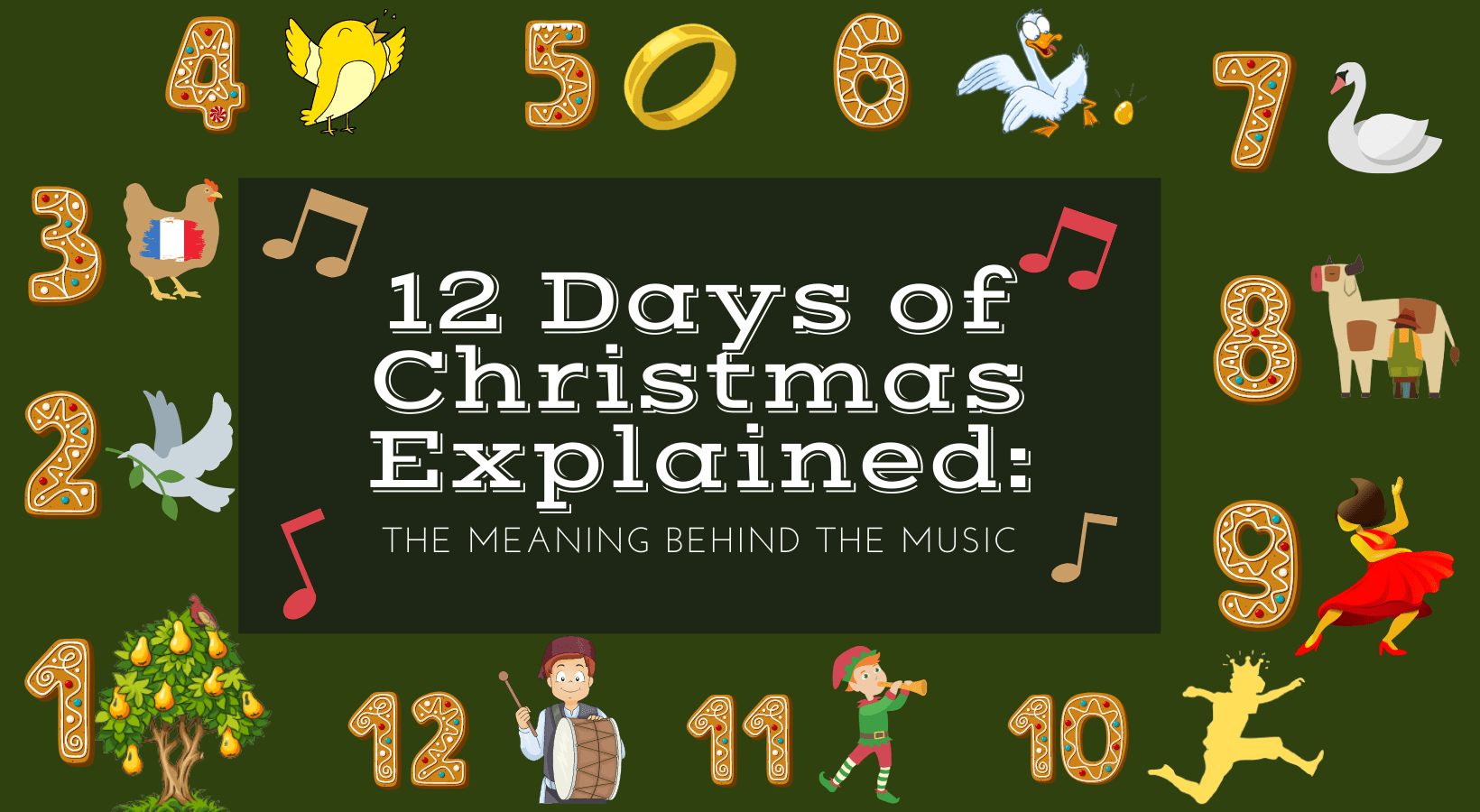
“The Twelve Days of Christmas” is one of the most popular and puzzling Christmas carols ever written. While it is cheerfully sung during the holiday season, many listeners have long wondered what the strange gifts—such as leaping lords, swimming swans, and a partridge in a pear tree—have to do with Christmas. Over the years, the song has inspired curiosity, debate, and interpretation. Some see it simply as a playful holiday rhyme, while others believe it carries deeper Christian symbolism.
The Origins of The Twelve Days of Christmas
“The Twelve Days of Christmas” first appeared in print in 1780 in England, in a children’s book titled Mirth Without Mischief. Early versions of the song were commonly used as a memory and forfeit game, where participants would recite the verses correctly or pay a penalty.
History of Christmas: Origin, Meaning, & Why It Is Celebrated December 25
At its core, the song reflects the Twelve Days of Christmas, the Christian festive season running from December 25 (Christmas Day) to January 5, with Epiphany celebrated on January 6. This explains why the song became associated with Christmas celebrations.
Most historians agree that the song was not originally written as a religious hymn, but as a folk rhyme meant to entertain.
The “Catechism Code” Theory: A Popular Interpretation
Over time, a fascinating theory emerged suggesting that The Twelve Days of Christmas was written as a secret catechism song for Roman Catholics in England during a period of religious persecution (roughly between the 16th and 18th centuries).
According to this theory, the song had two layers of meaning which are:
1. A surface-level children’s rhyme
2. A hidden religious code understood only by Catholics
Each gift symbolized a core Christian belief that children could memorize discreetly.
Who Is Santa Claus? The True Origin of Father Christmas Explained
While this interpretation is widely shared and spiritually meaningful to many, modern scholars have found no solid historical evidence that the song was intentionally created as a coded catechism. The theory gained popularity in the 20th century but lacks documentation from the time the song originated.
That said, symbolic interpretations do not need to be historically proven to be meaningful, especially within faith traditions. Many Christians continue to find these interpretations inspiring and educational.
Symbolic Christian Meanings Commonly Attributed to the Song
Below is the popular Christian symbolic interpretation of the gifts in The Twelve Days of Christmas:
“My True Love”
Often interpreted as God, the giver of all good gifts.
The Partridge in a Pear Tree
Commonly associated with Jesus Christ, symbolizing His sacrifice and care for humanity, much like a partridge protecting its young.
The Origin of the Christmas Tree: History, Meaning, and Traditions
Two Turtle Doves
Often said to represent the Old Testament and the New Testament, which together testify of God’s revelation.
Three French Hens
Traditionally interpreted as faith, hope, and love, the three theological virtues found in Christian teaching.
Four Calling Birds
Linked symbolically to the four Gospels: Matthew, Mark, Luke, and John
Five Golden Rings
Often associated with the first five books of the Old Testament (the Torah), foundational to biblical teaching.
Six Geese a-Laying
Interpreted as the six days of creation, reflecting God’s creative work as recorded in Genesis.
Seven Swans a-Swimming
Connected to the seven gifts of the Holy Spirit, understood in various Christian traditions.
Eight Maids a-Milking
Associated with the eight Beatitudes taught by Jesus in the Sermon on the Mount.
Nine Ladies Dancing
Often said to represent the nine fruits of the Holy Spirit: Love, Joy, Peace, Patience, Kindness, Goodness, Faithfulness, Gentleness, and Self-Control.
Ten Lords a-Leaping
Interpreted as the Ten Commandments, foundational moral laws in Christianity.
Eleven Pipers Piping
Symbolically linked to the eleven faithful disciples of Jesus (excluding Judas).
100 Popular Christmas Songs and Hymns: Authors, Singers, and Year Released
Twelve Drummers Drumming
Commonly said to represent the twelve points of belief in the Apostles’ Creed, summarizing core Christian doctrine.
Why This Interpretation Endures
Even though the catechism-code theory lacks firm historical proof, it continues to endure because:
It aligns naturally with Christian theology
It offers a memorable teaching tool
It adds depth and meaning to a familiar carol
It connects the song to the broader Christmas story
For many believers, spiritual meaning does not depend solely on historical origin, but on how a tradition points people toward faith, reflection, and truth.
So, Is The Twelve Days of Christmas a Religious Song?
Historically, it began as a folk rhyme and memory game.
Culturally and devotionally, it has been embraced as a Christmas carol rich with Christian symbolism.
Both perspectives can coexist without contradiction.
Bible Verses About Christmas: Old and New Testament Scriptures on the Birth of Jesus Christ
“The Twelve Days of Christmas” may sound playful and even puzzling at first, but its enduring popularity lies in its ability to spark curiosity and reflection. Whether viewed as a traditional memory song or as a symbolic expression of Christian belief, it remains a meaningful part of the Christmas season. Understanding the difference between documented history and devotional interpretation allows us to appreciate the song more deeply—without myth, without confusion, and without losing its wonder.
What Does The Bible Really Say About Celebrating Christmas?
Last modified: December 26, 2025