
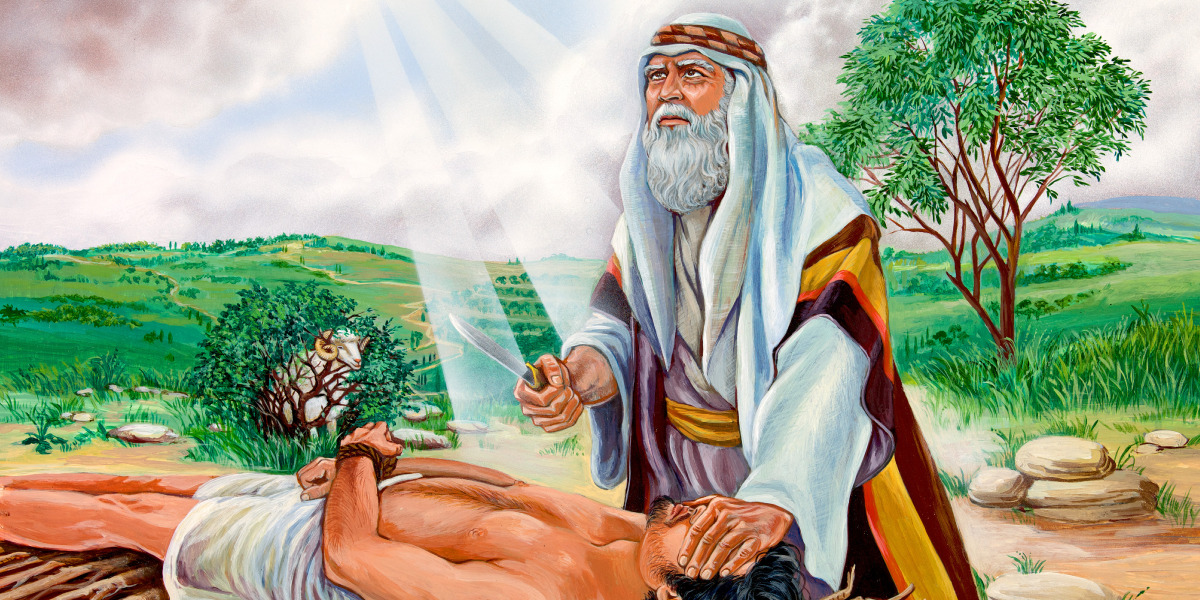
Abraham, known as the father of faith, is one of the most important figures in the Bible. His story spans several books of Scripture and demonstrates faith, obedience, and God’s covenant promises. One of the best-known stories about Abraham in the Bible is that he trusted God enough to be willing to sacrifice his son, Isaac if God wanted him to do so. If you know this story, you also know that God provided a ram to replace Isaac on the altar at the last minute. But there are many fascinating details about his life, family, and faith that are often overlooked.
- Abraham was originally named Abram
Genesis 17:5 (KJV):
“Neither shall thy name any more be called Abram, but thy name shall be Abraham; for a father of many nations have I made thee.”
God changed his name to signify his destiny as the father of many nations.
- Abraham was called by God to leave his father’s house at an old age of 75.
Genesis 12:1 (KJV):
“Now the Lord had said unto Abram, Get thee out of thy country, and from thy kindred, and from thy father’s house, unto a land that I will shew thee.”
50 Amazing Bible Facts You Should Know (With Bible Verses)
- Abraham lived in Mesopotamia – one of the first civilizations in the world.
Scripture tells us that Abram was a native of Ur, a city located in the region of Mesopotamia. Mesopotamia is credited with being the first known civilization in the world, and according to archaeologists, Ur was a major port city and urban center located on the Persian Gulf.
It was from this seaside city that God called Abram. Having spent his life in a bustling city at the edge of the water, Abram must have found a nomad’s life a big transition.
He left Ur of the Chaldees without knowing his final destination
“So Abram departed, as the Lord had spoken unto him; and Lot went with him: and Abram was seventy and five years old when he departed out of Haran.” Genesis 12:4 (KJV)
- Abram was raised by idol-worshiping parents.
God may have called Abram away from city life to remove him from temptations at home. Joshua 24:2 tells us that Abram’s father was an idol worshiper. This means at 75, that idol worship was familiar to Abram as well. Leaving behind his father’s house meant leaving behind everything that was familiar, including his religion. This new God, Yahweh, must have seemed very mysterious because he chose to communicate directly with Abram, while the false idols of Abram’s youth were understood to be distant gods who did not personally connect. This difference may have been one of the deciding factors in Abram’s choice to follow God’s leading.
- Abraham is considered the father of faith for Jews, Christians, and Muslims.
He’s a patriarch in Judaism, a prophet in Islam, and a spiritual ancestor in Christianity, revered across Abrahamic faiths for his unique trust in God.
God made a covenant with Abraham, promising to bless all nations through his descendants (Genesis 12:3).
Complete List Of 365 Fear Not In The Bible
- He had a son, Ishmael, through Hagar
Genesis 16:15 (KJV):
“And Hagar bare Abram a son: and Abram called his son’s name, which Hagar bare, Ishmael.”
This was before the coming of the promised child, Isaac.
- Abraham ‘lied’ about his wife Sarah being his sister, but the lies were not exactly lies.
While traveling, Abraham told two different kings that his wife, Sarah, was just his sister in order to protect himself from harm. Fortunately, both kings discovered the truth and returned Sarah to her husband. Genesis 20:2–7 (KJV): God warned Abimelech in a dream not to take Sarah.
But was Abraham actually lying? In Genesis 20:12, after being found out, Abram explained to King Abimelek that Sarah was the daughter of his father, but not of his mother. Is this problematic? Not necessarily. The laws of Moses regarding marriage among family members was not yet written as at this time until about 500 years later.
- Abraham’s first son Ishmael was born when Abraham was already 86 years old.
Genesis 16:16 (KJV): “And Abram was fourscore and six years old, when Hagar bare Ishmael to Abram.”
The fulfilment of God’s promise of a son to Abraham through Sarah came late according to human calender, which forced Sarah to talk her husband into sleeping with her maid which resulted to the birth of Ishmael. This highlights the tension between human impatience and divine timing.
Books In The Bible From Shortest To Longest
- Abraham was tested to sacrifice his promised son, Isaac
Genesis 22:2 (KJV): “Take now thy son, thine only son Isaac, whom thou lovest, and get thee into the land of Moriah; and offer him there for a burnt offering upon one of the mountains which I will tell thee of.”
One many not fully grasp the emotional intensity of being asked to sacrifice the very child you lived over 25-years of your life believing for, and through whom the covenant would be fulfilled. This ultimate test of faith is mind-blowing in its severity, but it was on of the things that stood out in Abraham’s life as the father of faith.
- Abraham interceded for Sodom
Abraham pleaded with God to spare the city if righteous people were found (Genesis 18:23–32). This shows Abraham’s boldness in prayer and intercession, and his relationship with God, negotiating with God Himself.
Genesis 18:23–32 (KJV): Abraham pleaded with God to spare the city if 50, 45, 40, 30, 20, or even 10 righteous people were found.
- Abraham interceded for the heathen king Abimelech
Abraham’s prayers not only protected himself but also saved a pagan king and his household a shocking example of intercession extending beyond Israel.
Genesis 20:17 (KJV): “So Abraham prayed unto God: and God healed Abimelech, and his wife, and his maidservants; and they bare children.”
- Abraham negotiated the purchase of the cave of Machpelah
Genesis 23:16–18 (KJV): “And Abraham hearkened unto Ephron…he weighed to Ephron the silver which he had named…”
Abraham, a man promised a vast inheritance, only ever owned one small plot in Canaan – a burial site, a cave in a field Abraham purchased from the Hittites so he could bury Sarah when she died. This burial site served as a representation of the promised land that Joshua would someday conquer.
This highlights the tension between God’s promises and Abraham’s earthly reality.
Who Divided the Bible Into Chapters and Verses, and When?
- Abraham’s faith transcended death itself—he looked forward to a promised city
Though he lived, died, and was buried in Canaan, Abraham’s faith was focused on a heavenly promise. Most people assume Abraham’s faith was limited to land and descendants, but it reached eternity itself.
Hebrews 11:10 (KJV):
“For he looked for a city which hath foundations, whose builder and maker is God.”
- Abraham lived to 175 years old
Genesis 25:7 (KJV):
“And these are the days of the years of Abraham’s life which he lived, an hundred threescore and fifteen years.”
- Abraham had a covenant sign of circumcision
Genesis 17:10–11 (KJV):
“This is my covenant, which ye shall keep, between me and you and thy seed after thee; Every man child among you shall be circumcised…”
Conclusion
Abraham’s life demonstrates what it means to trust God completely. From leaving his homeland to obeying God’s call and interceding for others, Abraham’s story is one of faith, courage, and covenant relationship. Abraham was not just a figure of unquestioned faith, he was a real person with human flaws, boldness, patience, and extraordinary trust in God. These facts reveal the depth and complexity of his character, showing that God can work through imperfect people to accomplish His incredible plans.
Meaning of “Eye for an Eye” in the Bible
Last modified: December 11, 2025